Hello, my friends and the occasional relative!
I missed last week. I thought about putting out a quick blast for the sake of keeping up with weekly output, but decided not to. Better silence than thoughtless blather, I hope!
I have been watching lots of writerly videos on You Tube this week. Yes, this is a background hum in my internet life, there is always a certain amount of that going on, but this week there was more engagement for me than is usual.
Two in particular were very useful. This one, a discussion with Paul Harding, was an excellent discussion of writing and a perspective shift for me on how to approach writing and the writing process. I was in a mad rush to get my next book started. This video persuaded me to slow down, to be thoughtful, and to allow the book to unfold. As my recurrent readers know, I have become more into outlining over the course of my career, having started out as a total seat-of-your-pants-make-it-up-as-you-go-along writer when a wild and crazy teen. I have an overall plan for The Red Palace, with phases from start to finish sketched out and a lot of background on characters and background events, but this video persuaded me to just go ahead and let the book start, let the characters start to interact, and see what happens without going into more detail in planning/outlining. Let it breathe, baby.
The second video was this one, an interview with Tim Grahl from Story Grid. Tim’s a pretty intense guy, and he is laser focused on improving the basics of writing, and the basics of scene. The craft of writing. He believes writing comprises of a bunch of learnable skills, and dammit, writers should master those! Yes, he has a system for teaching them, and he does sell it. Doesn’t mean the advice isn’t interesting or useful. I bought his editorial mentor Shawn Coyne’s The Story Grid as a result of seeing this video, because Tim reminded me to focus again on the nuts and bolts of the craft, and to concentrate on the art of the scene, so I’ll see what Shawn’s book has to say. Again, as regular readers of my column know, a bible of mine for helping me to improve the nuts and bolts of my writing for publication was another by an editor: Don McNair’s How to Editor-Proof Your Writing, so I figured it was time for me to see another experienced editor’s view on writing.
I think that both interviews have a lot to offer writers at any level. I think the future of writing for humans in a world of AI is Paul’s, but with a core set of skills gained from Tim’s perspective. You need both. Synthesize information from both, add your own fingerprint, do your best. Market better than I do!
Above all, be excited to write, to read, to learn. You will get better if you read, learn, write. If you want to get better. There is always more to learn. I’m not a teacher, just another schmoe picking things up here and there as I can. But I have optimism, even in a world where AI is marching over the horizon, stealing everyone’s work.
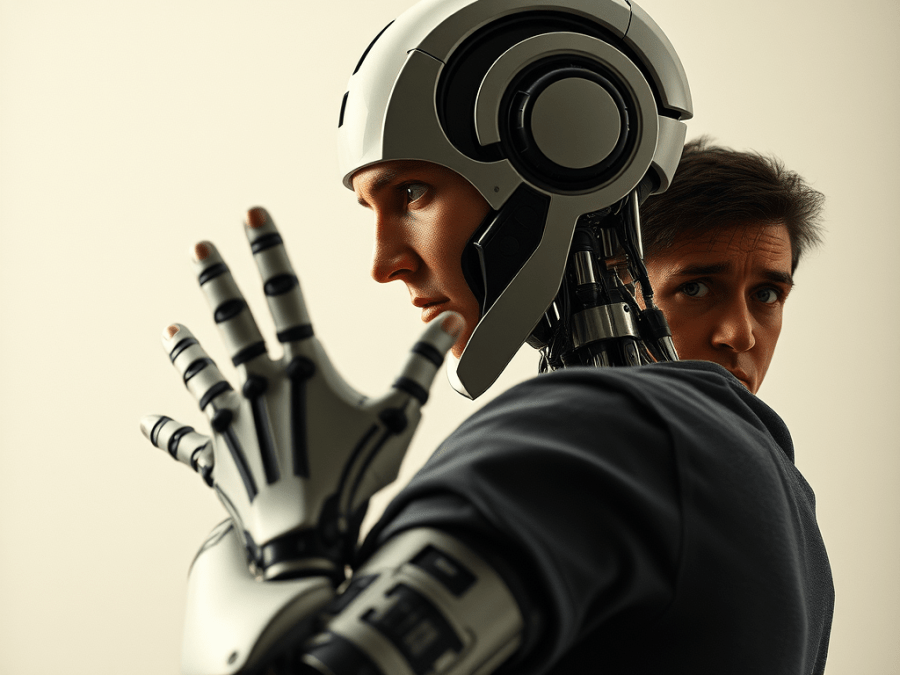
I think AI (now appearing on Amazon bestseller lists near you!) will learn all that the advice videos on structure and scene have to offer in pretty short order. They will get much much better at the language they already use. So they will write well constructed books that hit the preset marks prescribed by various structure systems and character development arc beats that have been spread far and wide on the internets, where they scrape content at will. This, to me, is inevitable. What they will not be able to mimic at least initially is the human context, the human interaction, subtext and the things left unsaid that speak powerfully to us. To make words resonate in a human mind with emotion, with deep recognition on the part of the reader is a skill, an art I hope they manage only accidentally!
A form of creative apocalypse (yes I used the word) may be here, or here soon, but humans will still have the drive to create and produce art. They just won’t be paid for it. Which is the case for most of us now anyway, but not all, and creative industries and creative outlets for people to pay the bills with will become increasingly rare. This sucks. I’d love to give up my day job and write. But how long until AI starts invading my day job? Then what? That is the true AI crisis coming over the horizon: art, music, and writing are just the first birds to fall dead out of the sky heralding its coming.
Doomerism is a heady goddam drug!
Until next week, my friends, keep believing in your dreams, keep being inspired by people who do believe in the creative process—like the folk in the videos linked above, and keep making art in the face of encroaching artifice. It is your soul, share it with other souls. The artificial eye that watches for patterns lacks the ability to see what magic can pass between two people in art. This is why we must continue to make it, and share it. Ciao.
Oh yeah! I have started writing The Red Palace. No prologue. New opening, nothing recycled from old written doodles. It’s not remotely perfect, but it’s a banger!
 Roderick T. Macdonald