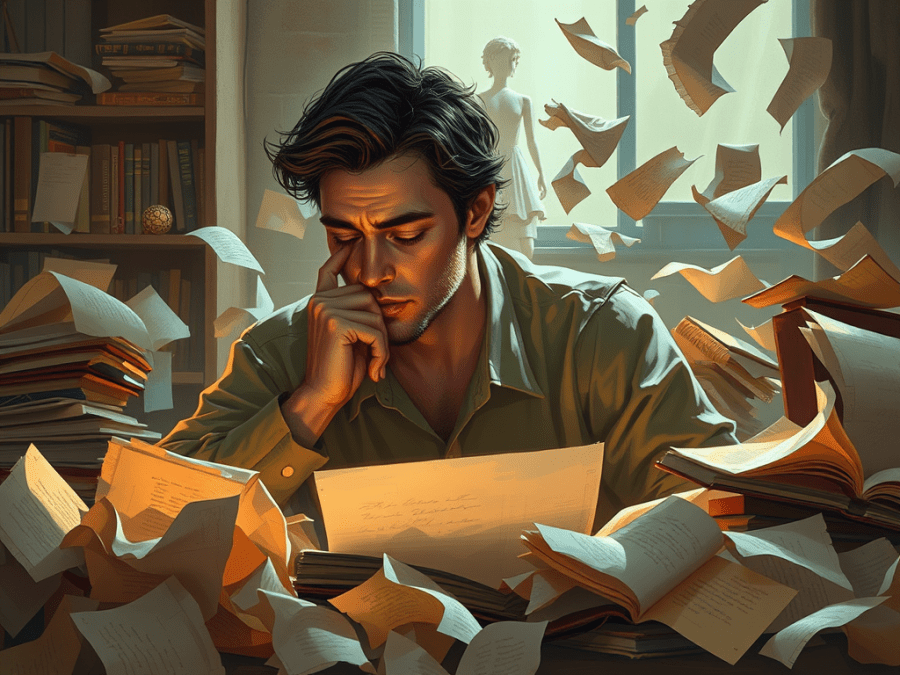
Hello, my friends and the occasional relative!
This is my third stab at this blog. I’ve missed weekly deadlines as a result. Originality warning! There isn’t any here, but I wanted to say it anyway.
The world is a complex place. We are complex creatures. But we delight in reducing the complex to the simple, finding patterns, correspondences, some more accurate than others, but something about them sings to and in us.
I think this is part of the joy of reading, and of enjoying story in any medium. We love to recognize a pattern, to anticipate its unfolding, to be delighted by a new twist or two, disappointed if it is too rote and easily anticipated, except, perversely, when we want the comfort of the entirely predictable. Hallmark doesn’t make those movies for no good reason you know.
When I was young, and for a long time afterwards, I was in love with the idea of reducing the irreducible to the magic sentence that made sense of everything. Philosophy offered glimpses of it, as did literature, and I think even more so great poetry offered flashes of that possibility. To capture a world, the world, in a line.
What would happen then? Enlightenment? I did not care, it was the yearning that was enough. Roads to Madness by Queensryche captures some of it, now I think about it.
But the world without and the world within are not easily captured in words, few or many.
I was also drawn to the idea of writing a very complex book, to fascinate with its clever machinery, obvious and hidden, and use it to deliver what? I’m not sure: complexity itself perhaps? Or a simple message, or multiple messages to be determined by the readers of my masterwork. I was young, and driven very much by ego and the need for acclaim. My reach undoubtedly exceeded my technical grasp.
What I see now (and this is not a new revelation by any means to anyone but me, and if you asked me this 25 years ago I’d have said I already knew what I’m about to say, but now the understanding of it hits much differently) is that however complex our books are, and I have read a few, none of them can fully capture the complexity of our real world. Only narrow vistas or perspectives at best.
Why? Because there is too much information out there, because conditions constantly shift in real time. Because we change our minds about ourselves, what we want and why, and are often all too ignorant of our own truest desires, though we think we can name them.
So instead of complexity, I think we seek coherence. My single sentence above. Something we can understand, a reduction of the world’s chaos into some lines of order that we can agree with, or argue with, in a way that feels rational, controlled. Or if not coldly rational, an understanding of our emotions and self that we can be comfortable with, explanations of who and how we are that let us accept where we are now, perhaps make changes in the future, building blocks of understanding.
In storytelling I think we do what the ancients did: we face a strange and alien universe that escapes our grasp with its vast scope, its infinite detail, its mysterious depths, and impose a uniquely human understanding upon the universe, and on ourselves. We see complexity, and reduce it into bite-sized chunks of simplicity, which we then forge into patterns, that can grow elaborate and beautiful, eventually so complex that few humans can even grasp what we have created. Our patterns, that we delight in, explain the world, investigate ourselves.
We have always had political upheaval, wars and factions, plagues and famines. Our earliest stories, those that have persisted anyway, have had most of the specific references to their time worn away, and those contemporary allusions which have survived that their original audiences would have appreciated are lost to us, but the central messages are not. Because those stories grasp at central themes of human existence, that are true no matter what time, location, or climate we live in.
These themes, instincts, passions, desires, whatever you want to name them, drive events that wear different cultural and temporal clothes, and lurk beneath the new complexities of who is doing what and why, because our oldest motivations remain the same. And it is those themes, those truths in our oldest and most beloved stories that allow them to resonate to us centuries and millennia later, that form the foundation of so many patterns we have created from our shifting cultural understandings of those touchstones.
Understanding those primal truths is not easy, even recognizing them as either primal or truth can be hard – we are champion nitpickers in addition to pattern finders: where one can see a clear pattern, another can convincingly argue it’s just happenstance, static, random shadows on an uneven wall. Using the wisdom of our earliest stories in fiction is harder. But if done well it can be a lens through which a chaotic complex world can, for a few seconds, minutes or hours at least, seem more coherent, less overwhelming.
So I guess my message this week is this, my friends: don’t retell mythology or the classics, use their messages to understand who we are today, (who we have always been) and write from there. Yes, we are complex beings in a complex and at times random world, seeking shelter from the storm where we can. Is that act itself not universal, something which unites us? I think it is.
*****
I sometimes wonder if universal versus particular truths is why Ben Jonson is mostly forgotten and Shakespeare revered. Perhaps it is that Shakespeare captured the universals of human existence so much better. Ben, in his day, wrote the most beautiful contemporary prose/poetry and had his finger on that culture’s pulse, (lots of satire), but when his culture passed into history, so the depth of his wit and allusions understood by his audience which caused him to be esteemed so highly by them at the time was also lost. And on the wheel turned.
 Roderick T. Macdonald